The nutra affiliate marketing is changing. What used to feel like a gladiator arena, where everyone hoarded secrets and threw shade at each other, is slowly becoming something that resembles an actual professional industry.
But can competitors actually work together without one of them plotting the other’s downfall? Should they even try?
Today, we’re doing something that would’ve seemed insane just a few years ago: putting two direct nutra advertisers in the same (virtual) room to talk openly about competition, collaboration, and why maybe, just maybe, we’re all better off when we stop treating each other like mortal enemies.
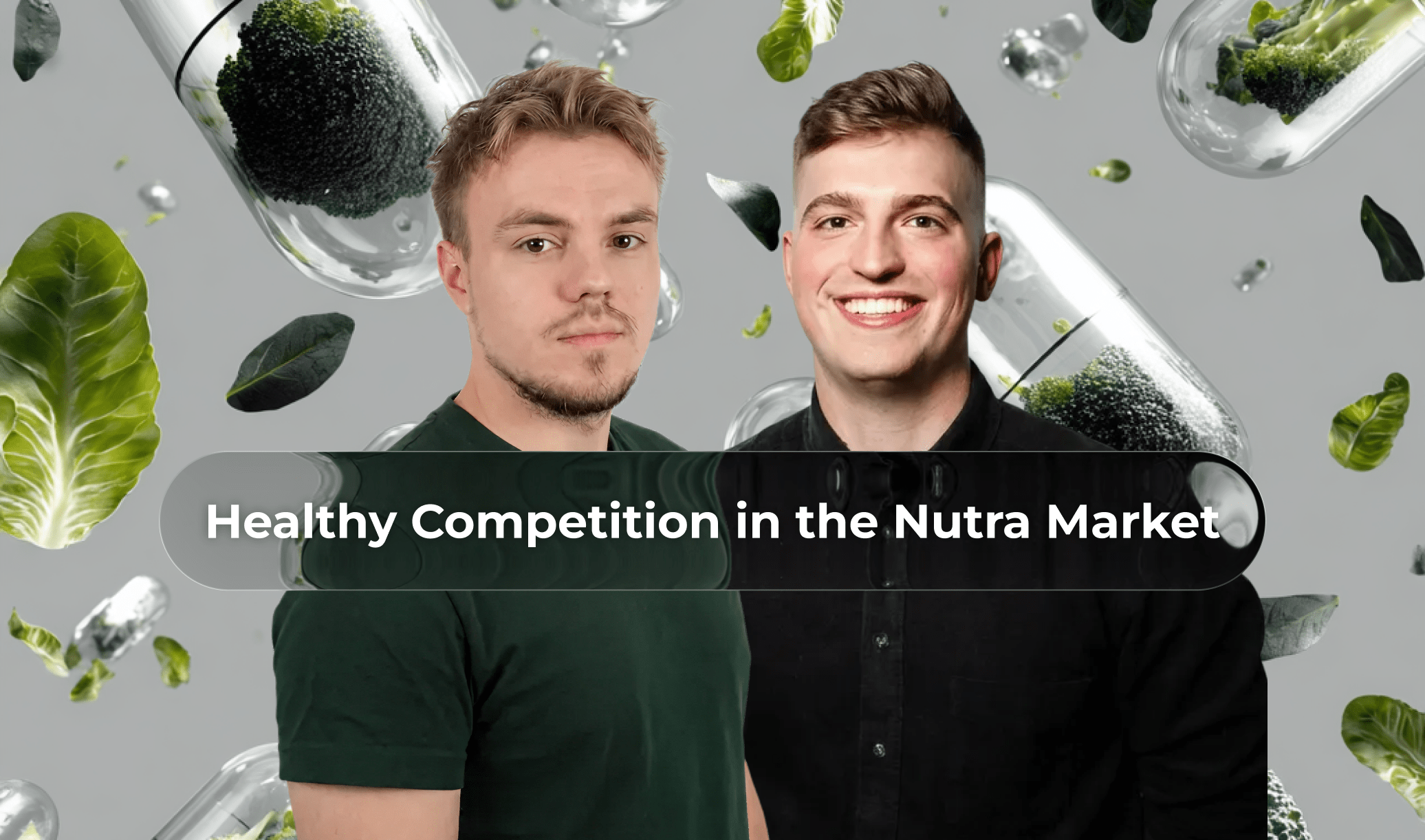
Meet Danil Zhuliev, COO of INB.bio and Nikita Omelchuk, COO of Aff1, who is also the author of the popular blog @n1ckblog. Two companies that compete for the same affiliates, the same traffic, the same market share. And yet, here they are, actually talking to each other like adults.
This interview itself is the message: the future of nutra isn’t about burning bridges, it’s about building them.
When Competitors Collaborate: Building a Healthier Market Together
Question: How can open dialogue between nutra advertisers make the market more stable, transparent, and fair? What do you personally see as the biggest benefits of collaboration instead of rivalry?
Nikita Omelchuk (Aff1): You know, a few years ago, if someone suggested I sit down for a public interview with a competitor, I probably would’ve laughed and asked what they were smoking. But here’s what I’ve learned: open dialogue creates mutual understanding and helps everyone raise their game.
When advertisers share insights about best practices, compliance challenges, or what’s actually working in new GEOs, we all avoid the same mistakes.
Personally, the biggest benefit I see is that collaboration reduces paranoia. When you treat competitors as peers instead of enemies, you stop wasting mental energy on the “us versus them” drama and can focus on actually growing the market. Plus, you know what? Innovation happens faster when ideas are flowing.
Danil Zhuliev (INB.bio): I completely agree with the innovation point. At INB.bio, we’ve always believed that a rising tide lifts all boats. When we share knowledge about what’s working we’re making the whole ecosystem stronger.
The biggest benefit I see is trust-building. When affiliates see advertisers acting like professionals instead of like rival gangs, it changes how they view the entire vertical. That professionalism attracts better talent, more serious partners, and creates more opportunities for everyone. It’s pretty simple, really: grown-ups succeed more than children throwing tantrums.
In practice, this means openly discussing real approval benchmarks, traffic expectations, and GEO-specific realities instead of selling affiliates unrealistic promises.
Transparency Over Rivalry: The Future of Nutra Advertising
Question: Why is openness between companies so important today? How does transparency among advertisers help the entire nutra industry grow and reduce toxic competition?
Danil Zhuliev (INB.bio): Transparency is basically the grown-up version of “show your work” from math class. And just like in school, it proves you actually know what you’re talking about instead of just making stuff up.
We’ve made transparency a priority. We’re open about our offers, our requirements, and yes, even when things aren’t perfect. This honesty has built stronger relationships with partners and, I believe, has pushed other advertisers to step up their game too.
Transparency is how we shed the “snake oil salesman” reputation and prove we’re running real businesses.
For example, we prefer to communicate real approval ranges per GEO upfront rather than optimize short-term attraction at the cost of long-term trust.
Nikita Omelchuk (Aff1): Danil nailed it with the “snake oil salesman” comment. The nutra industry has been fighting that stereotype forever, and transparency is our best weapon against it.
When advertisers are open about traffic quality, conversion data, and yes, even problems like fulfillment delays or inventory issues, it builds trust. And trust is basically currency in this industry.
I think of transparency as the antidote to toxic rivalry. It replaces suspicion with cooperation and short-term “get mine” thinking with long-term partnership.
Plus, let’s be practical: the affiliates talk to each other. If you’re lying about your approval rates or playing games with conversions, everyone’s going to know eventually. You might as well be honest from the start and save yourself the reputation hit.
From Competitors to Industry Allies: This Interview as an Example
Question: How can companies that used to compete find common ground and create joint initiatives? How does this cooperation influence the reputation of the whole market?
Nikita Omelchuk (Aff1): Well, this interview is living proof that it’s possible. A few years ago, two direct nutra advertisers sitting down for a public conversation would’ve seemed about as likely as Facebook approving a weight-loss ad on the first try. (If you’ve ever run FB ads, you know exactly what I mean.)
But here we are. And I think it sends an important message: the market is growing up.
Companies can find common ground by focusing on shared challenges. For example, we all deal with compliance issues, COD logistics nightmares, fraud, and the eternal struggle of explaining to payment processors that no, we’re not selling magic beans. These are industry-wide problems, so why not work on industry-wide solutions?
Danil Zhuliev (INB.bio): The reality is that this collaboration shows confidence, not weakness. At the same time, collaboration doesn’t mean tolerating unethical behavior, transparency and professionalism still draw a very clear line in the market. Both Aff1 and INB.bio are secure enough in what we bring to the table that we can have an open dialogue without freaking out. And honestly? The response has been overwhelmingly positive. Affiliates have told us they appreciate seeing advertisers who can be professional and respectful instead of subtweeting each other like teenagers.
Look, we’re not merging companies or becoming best friends forever. We’re still competitors. But we’re competitors who recognize that some things are bigger than our quarterly numbers. When the whole vertical succeeds, we all benefit. When the whole vertical looks sketchy and unprofessional, we all suffer. It’s really that simple.
The Win-Win Philosophy: Strengthening the Ecosystem
Question: Why does a “win-win” mindset make the market more advanced and sustainable?
Danil Zhuliev (INB.bio): The win-win mindset is basically the difference between playing checkers and playing chess. With checkers, you’re just trying to take out the other person’s pieces. With chess, you’re thinking several moves ahead and recognizing that sometimes sacrificing a pawn helps you win the game.
At INB.bio, we’d rather sacrifice short-term margin than damage long-term partner trust, that trade-off always pays back. Fair commissions for affiliates mean they’re motivated to stick with us long-term. Quality products and reasonable prices mean customers actually come back. And yes, even collaborating with competitors when it serves the industry as a whole.
Nikita Omelchuk (Aff1): At Aff1, win-win thinking has meant focusing on long-term value instead of short-term extraction. For example, we invest heavily in customer service and product quality because we know that benefits our affiliates through higher retention and LTV. That, in turn, benefits us through stronger partnerships and better reputation. Everyone wins.
Win-win is our enlightened self-interest. It builds an environment where trust, transparency, and quality flourish. And that makes the market more resilient and sustainable for the long haul. Plus, you get to look at yourself in the mirror without cringing, which is nice.
Global Trends: Beyond Borders
Question: What global trends are shaping nutra now? Which GEOs are developing the fastest, and where do you see the biggest opportunities or challenges?
Nikita Omelchuk (Aff1): First, health consciousness is through the roof globally. The pandemic gave everyone a reality check about wellness, and that didn’t just fade away. People are investing in supplements, immunity boosters, fitness products.
Second, e-commerce and digital marketing have exploded. More people are comfortable buying health products online, which is obviously great news for affiliate advertisers. The entire customer journey has moved digital, which means more opportunities for us to reach and convert audiences.
The biggest opportunity is getting into emerging markets early and doing it right: localizing campaigns, understanding cultural preferences, building relationships before everyone else floods in. The challenge is navigating different regulations, logistics, payment methods, and local consumer behavior. Every market has its quirks. But honestly, that’s what makes it interesting. If it were easy, everyone would do it.
Danil Zhuliev (INB.bio): Nikita covered the major trends really well. I’d add that we’re seeing something fascinating in traditionally “tier-3” markets, they’re maturing way faster than anyone expected. Countries that five years ago seemed too risky are now showing performance metrics that rival established markets. For example, our recent campaigns in Morocco and Tunisia show really strong performance.
Profitable
GEOs to Target
Find out where you can get the best result
View GEO List


The biggest challenge I see across all GEOs is regulatory scrutiny. Governments everywhere are paying more attention to health supplements. Which is actually good for the industry long-term, it forces out the cowboys, but it means we need to be way more careful and professional.
What Defines Quality in Nutra Today
Question: Which metrics and principles define a truly quality nutra advertiser today? What standards should the market move toward?
Danil Zhuliev (INB.bio): Quality in nutra has evolved so much. It’s no longer just about who can scale fastest or pay the highest CPA, though obviously those things still matter.
Today, quality advertisers are defined by sustainability, transparency, and how they treat partners. From a metrics standpoint, we look at approval rates, lifetime value, repeat purchase rates. At INB.bio, our approval rates typically run above 20-25%, which means when an affiliate sends us a lead, there’s better than even odds it becomes a confirmed, paid order. If we see anomalies or traffic issues, we pause and investigate instead of shaving, long-term credibility is more valuable than short-term gains.
The standards the market should move toward include mandatory transparency about approval and conversion data, industry-wide cooperation on anti-fraud, ethical payout policies with zero shaving, and genuine investment in product quality instead of just marketing fluff. When these become the norm rather than “nice to have,” the whole vertical will be dramatically stronger.
Nikita Omelchuk (Aff1): Danil covered metrics excellently. I’ll add that quality also means consistency and reliability. An advertiser might crush it one month, but if they can’t maintain performance.
I also think quality means taking responsibility for the end consumer. We’re not just moving products; we’re influencing people’s health and wellness decisions. That’s serious. It requires honest marketing, quality products, and fair customer policies. The companies that take that responsibility seriously will be the ones still around in five years. The ones that don’t… well, enjoy your brief moment of profits before everything implodes.
Innovation vs. Imitation: Where’s the Line?
Question: How do you see the balance between inspiration and imitation when it comes to creatives, funnels, or offers? Where is the line in nutra marketing?
Nikita Omelchuk (Aff1): Taking inspiration is totally fair game and necessary for market evolution. If one advertiser discovers that quiz funnels work great for a certain demographic, others can experiment with quiz funnels in their own way. That’s market intelligence. That’s how innovation spreads.
But there’s a huge difference between “inspired by” and “ripped off.” If you’re downloading someone’s lander, changing the logo, and calling it yours, that’s theft. It’s also lazy and, ironically, usually ineffective.
The line is crossed when you stop innovating and become a full-time copycat. At that point, you’re not adding value to the market; you’re just noise. And honestly, it’s boring. Don’t you want to be the person others are copying instead of being the copycat?
We’ve had our landing pages copied pixel-for-pixel before. It’s annoying, but it’s also kind of flattering? Like, “thanks for confirming we built something good enough to steal.” But it also creates confusion in the market and usually doesn’t even work for the copier. So everyone loses.
Danil Zhuliev (INB.bio): At INB.bio, we’ve been on both sides: we’ve had our successful campaigns ripped off, and yes, we’ve been inspired by competitors’ innovations. The key word is “inspired,” not “duplicated.”
If you’re using spy tools to see what’s working and then creating your own version with your own creative, your own copy, your own unique value proposition – that’s fair game. That’s competitive intelligence. But if you’re downloading assets, changing the brand name, and launching – that’s lazy theft, and karma will get you eventually. Usually in the form of terrible performance metrics.
I tell my team: always ask “how can we do this better or different?” You saw a successful before/after testimonial campaign? Great, can you do video instead of images? Can you target a different demographic? Can you emphasize a different benefit? Use it as a starting point, not the destination.
The Human Side of Competition
Question: How do you maintain respect and healthy boundaries while still competing in the same field?
Danil Zhuliev (INB.bio): Maintaining respect starts with remembering that we’re all human. Everyone in this space is working hard, dealing with their own challenges, trying to build something successful.
Healthy boundaries for me mean a few things:
- I don’t trash-talk competitors publicly (it’s unprofessional and always backfires),
- I respect confidential information,
- I compete on merit rather than through shady tactics.
No poaching employees with insane offers just to hurt the competition. No spreading false rumors. No stealing proprietary tech or creative.
Plus, on a personal level, I sleep better knowing INB.bio’s success is built on our own merits, not on sabotaging others. Also, I like being able to have a beer with competitors at conferences without it being weird. Life’s too short for constant drama.
Nikita Omelchuk (Aff1): Danil nailed the “small world” point. We see each other constantly: conferences, mutual contacts, shared affiliates. How you treat people in a small world matters because word gets around fast. Be a jerk, and everyone will know by the next event.
For me, respect comes from separating business competition from personal relationships. We compete fiercely in the marketplace, but that doesn’t mean we can’t be cordial or even friendly – in person. I can respect what Danil and INB.bio have built while still trying to outperform them in the market. Those aren’t mutually exclusive.
Trust, Transparency, and Professional Dialogue
Question: How can open, professional communication raise the reputation of both companies and the entire vertical?
Nikita Omelchuk (Aff1): This interview is literally a case study in answering that question. By having this open dialogue, both Aff1 and INB.bio are demonstrating confidence, transparency, and professionalism. That immediately changes how affiliates, partners, and even regulators perceive both companies, and the industry as a whole.
Open communication builds mutual respect. When companies choose dialogue over secrecy and professional engagement over public feuds, it signals maturity and trustworthiness. We’re not shady rivals trying to undercut each other in dark corners; we’re thought leaders having intelligent conversations about industry challenges.
When affiliates see leading advertisers like Aff1 and INB.bio engaging respectfully, congratulating each other’s successes, having constructive dialogues, it transforms their perception. The vertical starts feeling like a professional community instead of a toxic battleground. And that benefits literally everyone involved.
Danil Zhuliev (INB.bio): For too long, nutra has had this reputation as cutthroat, unethical, chaotic, basically the Wild West with worse fashion choices. Every time advertisers engage in public feuds or shady competitive practices, it reinforces that stereotype. But every time we have professional, respectful interactions, we chip away at it.
The bottom line: open, professional communication is a rising tide that lifts all boats. It costs us nothing to be respectful and transparent with each other, but the reputational benefits are substantial. Plus, honestly, it’s just more fun to work in an industry where people aren’t constantly at each other’s throats.
The Psychology of Competition
Question: What drives people in this industry: ego, ambition, or passion? How can emotional intelligence improve collaboration?
Danil Zhuliev (INB.bio): Honestly? All three. And you need all three to succeed in affiliate marketing. Passion gives you the energy to work ridiculous hours and push through challenges. Ambition gives you the vision to think big and chase aggressive goals. And ego, controlled ego, gives you the confidence to take risks and believe you can win against tough odds.
The problem is when any of these gets out of balance. Unchecked ego makes you arrogant and defensive. Unchecked ambition makes you willing to compromise ethics for results. Even unchecked passion can lead to burnout or tunnel vision.
Nikita Omelchuk (Aff1): There’s a formula I like: Success = Intelligence + Hard Work + Passion – Ego – Jealousy. That subtraction part is key. You have to actively work to minimize the negative impacts of ego and jealousy, and emotional intelligence is what enables that.
In practice, emotional intelligence shows up in how you handle both wins and losses. When you win, can you stay humble and give credit to your team and partners? When you lose, can you analyze what went wrong without blaming others or making excuses? That takes self-awareness and emotional regulation.
The most successful people I know in this industry aren’t necessarily the smartest or most aggressive, they’re the ones who can harness their ambition and passion while keeping their ego in check and maintaining good relationships. That’s the power of emotional intelligence.
Building Bridges in a Competitive Market: Our Message
Question: What message do you hope this conversation sends to affiliates and advertisers in the nutra space?
Nikita Omelchuk (Aff1): The core message is simple: collaboration and openness are possible and beneficial, even among direct competitors. By having this dialogue, Danil and I are saying: “Look, we compete every single day, but we share a vision of a strong, ethical, professional nutra industry.”
We want affiliates to know they don’t have to pick sides or navigate some dramatic rivalry. They can trust that companies like Aff1 and INB.bio are focused on improving the ecosystem, not just destroying each other. Healthy competition doesn’t require hostility or secrecy.
For other advertisers, the message is that there’s more to gain from building bridges than burning them. The old mentality; hoarding secrets, viewing everyone as enemies, competing through sabotage is outdated and counterproductive. We’re showcasing a new paradigm where exchanging ideas and maintaining mutual respect leads to better outcomes for everyone.
Essentially, we’re demonstrating that the nutra market is maturing. We’re moving beyond petty rivalries and toxic competition into an era of professionalism and strategic partnership. That evolution benefits everyone: affiliates get better partners to work with, advertisers operate in a more stable market, and the entire vertical gains legitimacy and opportunity.
Danil Zhuliev (INB.bio): I hope affiliates walk away thinking, “Wow, maybe this industry is actually becoming professional.” For too long, affiliates had to navigate sketchy advertisers, broken promises, and constant drama. Seeing companies like Aff1 and INB.bio engage respectfully shows them the vertical is evolving for the better.
For advertisers, I hope this inspires more openness and collaboration. You don’t have to agree with your competitors on everything. You don’t even have to like them personally. But you can treat them professionally, engage respectfully, and recognize that their success doesn’t require your failure.
This conversation also sends a message about confidence. Both Aff1 and INB.bio are confident enough in our own value propositions, products, and partnerships that we can have this dialogue without fear or paranoia. That’s the kind of confidence that comes from operating ethically and building real value.
I’ve been in this market long enough to know: shortcuts always cost more, especially in an industry this small.
What’s Next: The Real Side of Nutra Podcast
This interview is just the beginning. Following Affiliate World Bangkok, Nikita and Danil are ditching the professional polish and sitting down for a no-holds-barred podcast where they’ll share the stories advertisers usually save for after-party drinks.
Expect:
- The chaos behind conference booths (spoiler: it’s always more chaotic than it looks)
- Celebrity marketing experiments that went hilariously wrong
- Personal mistakes and spectacular failures that became expensive learning lessons
- Why they still love nutra despite the headaches, stress, and occasional urge to quit and become fishermen
- Industry myths versus brutal reality
- Travel disasters, product nightmares, and the moments that tested everything
Think of it as the unfiltered, uncensored version of this conversation, with more laughs, more honesty, and probably some stories they’ll regret sharing later. Because sometimes the best insights come from admitting the stuff you usually hide.
Stay tuned for our podcast “The Real Side of Nutra”
The nutra affiliate industry is evolving from a battleground into a community. This conversation between Nikita Omelchuk and Danil Zhuliev proves that competitors can build bridges without burning their own houses down. The question is: are you ready to be part of this evolution, or are you still clinging to the drama of the old days?
Spoiler alert: the future is more profitable and way less stressful.
Join Our Partner Network
Get access, guidance, and real support from our team
Register Now