We use cookies to personalize content, improve site performance, and analyze traffic. We also share information about your site usage with our advertising and analytics partners. They may combine it with other data you have provided or that they have collected from your use of their services.
Customize
Cookie Details
Необхідні - забезпечують базову функціональність сайту, наприклад, навігацію та доступ до захищених розділів. Без цих файлів сооіе сайт не може працювати належним чином.
Preferences - allow the website to remember your preferences, such as language or region.
Statistics - help us analyze how your site usage by collecting anonymous data.
Marketing - used to track user activity and display relevant advertisements.
More details
Cookies are small text files used by websites to improve your user experience. The law allows us to store cookies on your device if they are strictly necessary for the site's operation. For all other types of cookies, we need your consent. This means that:
Necessary cookies are processed based on Art. 6(1)(f) GDPR.
Other cookies (preferences, statistics, and marketing) are processed based on Art. 6(1)(a) GDPR.
This site uses different types of cookies. Some of them may be placed by third-party services.
You can change or withdraw your consent at any time in the settings.
Find out more about how we process personal data in our
Privacy Policy.
Decline
Accept
Accept All
WE MADE IT 6 YEARS — HONESTLY, HOW?
How INB.bio grew from chaos to a 400-person global wellness ecosystem
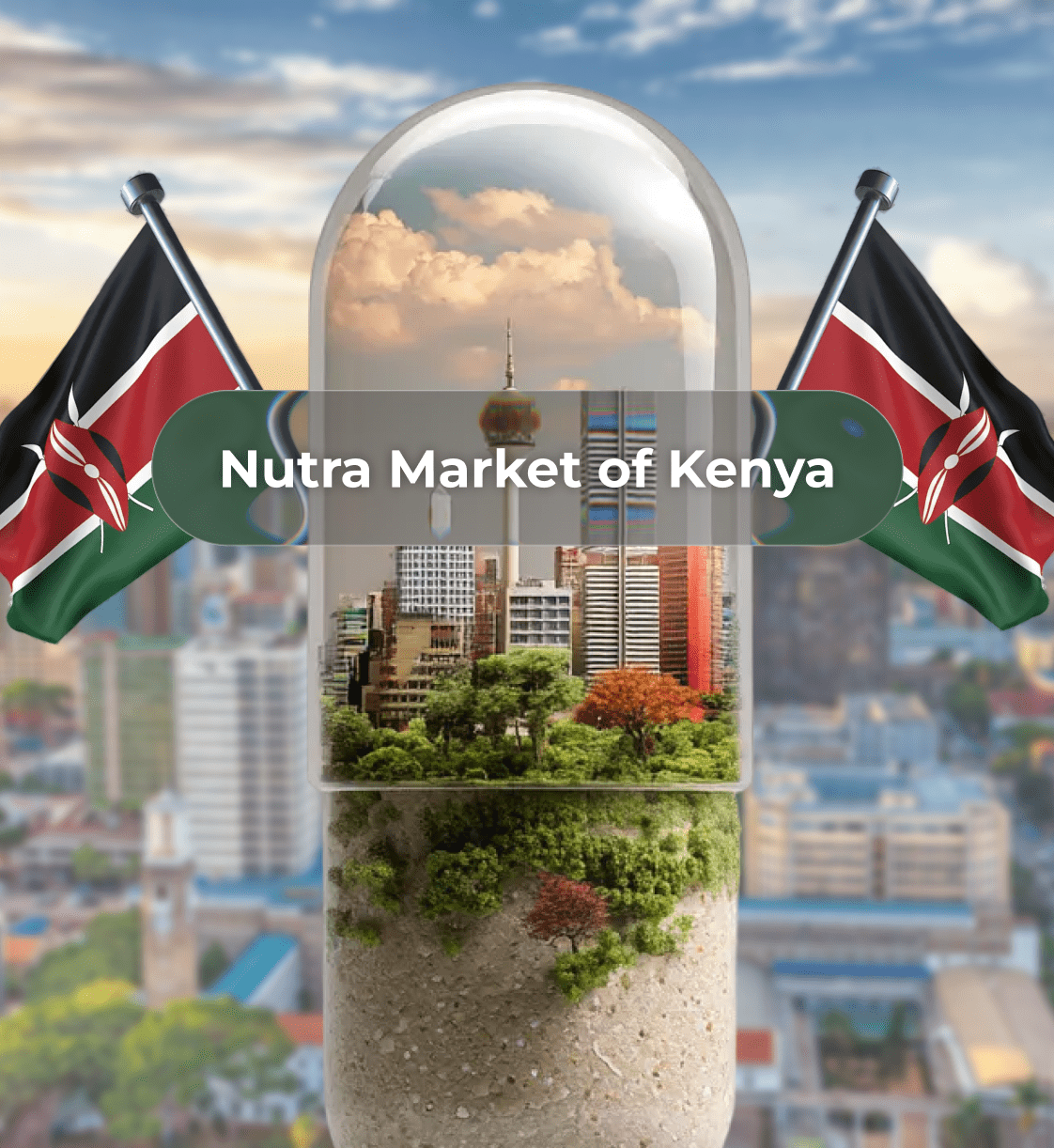
Kenya – a Nutra Market Where $50 Works Better Than $500 in Tier-1
Written by
INB Team
Published on
December 18, 2025
Share on
If just a few years ago Kenya was mostly associated with tourism and wild savannas, today it’s increasingly seen as one of the most promising destinations for affiliate marketing. And it’s not about exotic vibes. The point is: Kenya has something many other GEOs are missing: a large solvent audience, low competition and consumers who are open to new products.
Partners who previously focused on Tier-1 are now actively searching for markets where they don’t have to compete with hundreds of advertisers for every click.
If you want to understand how to start affiliate marketing in Kenya, learn why the approval rate consistently stays at 20–25%, and why COD builds trust here, this article is for you.
A Young Market with Mature Numbers
Many affiliates assume that markets like Kenya, Rwanda, Senegal, and Morocco are complicated: different languages, culture, mentality, poor internet coverage. It seems like getting conversions would be difficult. But the numbers tell a very different story.
Here’s what the Kenyan market looks like today:
27.4M internet users. Nearly half of the country is online and actively shopping.
57.5M population. That’s more than Spain. The median age is 20, but your real buyers are not the youth – they’re financially stable people aged 55–57 living in major cities.
GDP growth ~5%. A sign of economic stability.
E-commerce & D2C growth. Consumers are shifting from offline pharmacies to buying directly from brands.
Kenya offers an audience open to innovation, moderate competition, and a $4 average CPL.
And most importantly – you don’t need a big budget to start. A $50 test is enough to get actionable analytics, and $100 gives you a clear performance picture.
That’s exactly why affiliate marketing Kenya is growing so fast. More partners consider the country a part of their long-term profit strategy. A whole direction “Kenya affiliate marketing” is forming right now and strengthening each year.
Kenya’s median age is just 20. Sounds like a TikTok-friendly market, right? But in reality – it’s the opposite.
Our real customers are 55–57 years old.
Why? Because young people don’t buy products for joints, men’s health, heart support, or vision.
People 55+ in Kenya earn $450–850 monthly, live in major cities (Nairobi, Mombasa, Nakuru, Kisumu), actively use Facebook & Messenger, watch product reviews, trust testimonials from people their age.
They’re not chasing big brands – they want a natural product that actually helps.
Typical customer portraits:
Mary, 56, Nairobi.
«An accountant who earns around $600. Suffers from chronic knee pain. Saw a Facebook story from a woman her age talking about a natural product. Spent two days reading reviews. Ordered via COD because it feels safer. A month later, left her own comment under the ad.»
Peter, 58, Mombasa.
«Earns ~$500. Monitors his blood pressure and heart. Saw a post about a heart-support product with natural ingredients, watched a testimonial, and placed an order. After delivery, recommended the product to his brother.»
This audience responds best to affiliate programs in Kenya, especially when communication is warm, human, and simple.
Start with Nairobi, then scale into other major cities. This approach will bring the most profit.
What Builds Trust in Kenya
To understand why affiliate programs in Kenya perform well, you need to know the logic of the local buyer:
MSDS certification is the foundation. Kenyans want to see an official document proving that the product is safe, natural, and manufactured according to proper standards.
Cash on Delivery (COD). The ability to pay upon delivery instantly adds a “trust point” to the seller in the eyes of Kenyan consumers. For many locals, it works as a built-in guarantee of honesty.
Realistic reviews. Before/after photos, videos, and short personal stories describing the product’s effect work far better than any polished advertising.
A local call center. An operator who speaks the customer’s native language, understands their concerns and cultural context, and knows how to address their doubts – that’s 90% of success.
Fast delivery. Customers want to receive their order as soon as possible. The longer they wait, the higher the chance they will cancel. In Kenya, the optimal delivery window is considered 1-7 days.
Honest, simple communication. Clear explanations of the product’s benefits, transparent ingredient information, straightforward language, a soft tone, and no promises of “miracle results in three days” dramatically increase trust in the brand.
If you’re just starting out, the best choice is pay per click affiliate programs in kenya, because they give affiliates more control in the early testing stages.
How Much Can You Earn? A Real INB.bio Case
One of our partners, Mark, decided to try entering the Kenyan market. He allocated $150 to start, chose a joint-support product, prepared several landers adapted for the local audience, and began driving traffic.
Over the first two days, he received 39 leads with a 22% approval rate, which resulted in 9 confirmed orders. 9 × $22 = $198 in revenue – the initial budget was almost fully recovered immediately.
After that, Mark increased his daily budget to $300, and that’s when the real growth began.
On average, he was receiving 78 leads per day. 78 × 22% = 17 confirmed orders. 17 × $22 = $374 in revenue. $374 – $300 = $74 of pure profit every day.
Monthly stats:
Cost: $9,000
Revenue: $11,200
Profit: $2,220
This is how real affiliate marketing in Kenya works.
Does everyone earn like this? No.
But the market allows it – those who test consistently get results.
Is it possible to achieve more here? Definitely yes.
Kenya isn’t a “one day” market. It takes consistent work, testing, and solid analytics.
We provide the best affiliate programs in Kenya for stable, predictable profit.
Ready to Start Today?
Kenya is a window of opportunity that’s wide open right now.
You can watch from the sidelines and wait for a “perfect moment.”
You can come later and face a crowded market.
Or you can enter now, when competition is minimal, and take the biggest share.
Leave your application to get your first offer for Kenya and a full consultation. We’ll help you choose the product and creatives – all you need is to drive traffic.